

Independent maintenance, on-site and remote, across every OEM
DTC keeps networks supplied, supported and sustainable across their whole life. For almost 30 years we have sourced telecoms hardware, repaired and recovered it, and kept ageing networks running, backed by one of the largest independent secondary markets in the industry.
Third-party maintenance (TPM) is independent support for the hardware you already run, an alternative to the OEM’s own maintenance contract. We cover multi-vendor estates, including end-of-service-life kit, with repair, spares and field engineering behind every agreement.

Maintenance backed by our own spares inventory
Because we run one of the largest secondary-market inventories in the industry, the spare you need is usually already in stock rather than something we have to source after a fault. That shortens restoration times and lets us keep supporting equipment long after parts become hard to find.
- Spares held to your SLA – reserved up front, not sourced after the fault
- Multi-vendor from one pool – every manufacturer, no separate stockholdings
- UK-based stock – not waiting on an import

Component-level repair when no spare exists
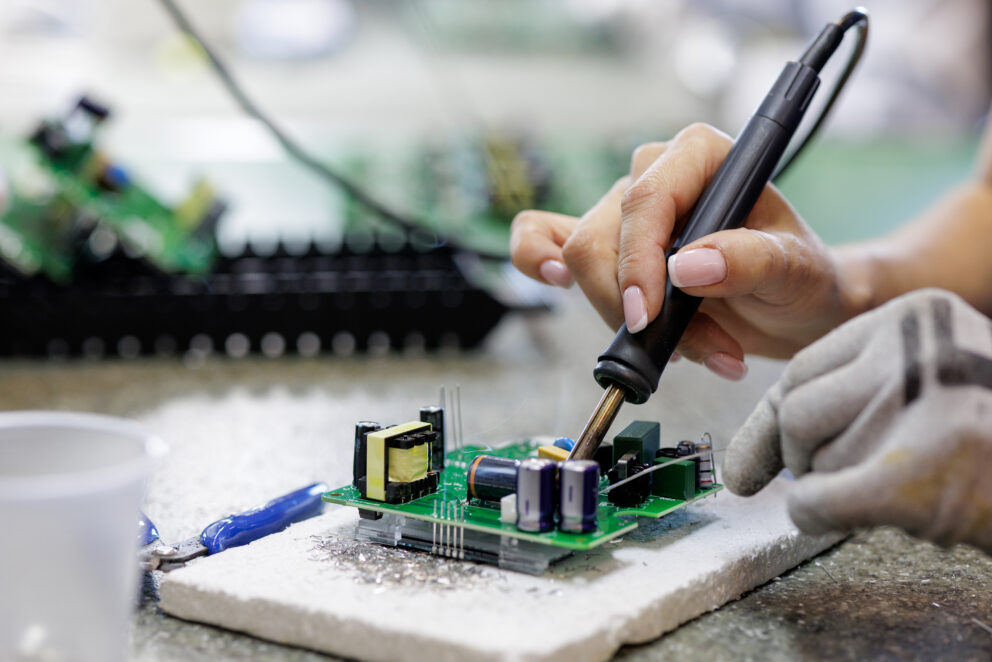
When a part is genuinely unobtainable, we repair the failed unit down to component level in our own workshop. It keeps older and rarer equipment in service rather than forcing an unplanned network change.
- Board and component level – down to the chip, not just module swaps
- Our own workshop – repairs stay in-house, not subbed out
- Tested and warrantied – returned proven and covered
Spares, repair and asset recovery – from one vendor
Maintenance, spares, repair and end-of-life recovery all come from the same place. DTC can help you keep equipment supported through its whole life, without handing off between separate suppliers.
- One contract, one SLA – not a stack of OEM agreements to manage
- One point of contact – a single team that knows your estate
- ISO 9001 / 14001 / 45001 – accredited across quality, environment and safety
Why partner with DTC?

The independent alternative to OEM support
Maintenance for the hardware you run, without the OEM contract terms or prices.

Backed by one of the largest spares pools
Maintenance is only as good as the spares behind it. Ours come from one of the largest independent secondary markets, so we can keep even discontinued kit running.

One partner across every vendor
Replace a stack of separate OEM agreements with a single multi-vendor contract and one point of contact.

SLAs that suit your network
Response and cover levels set around how critical the equipment is, not a one-size-fits-all OEM package.
What third-party maintenance is, and when it makes sense
Third-party maintenance (TPM) is hardware support from an independent specialist rather than the original manufacturer. It covers the same equipment, usually for less, and it keeps going after the OEM declares end-of-service-life.
What our maintenance covers
- Multi-vendor hardware support across your whole estate
- Reactive fault response, on-site and remote
- Planned preventative maintenance and health checks
- Spares held to your SLA, ready before a fault
- Component-level repair when no spare exists
How it differs from OEM maintenance
OEM contracts are single-vendor, priced at a premium, and they end when the manufacturer decides a product is obsolete. TPM is multi-vendor, costs less, and is at its most useful exactly where the OEM stops, on mature and end-of-life kit.
Spares are what make it work
Maintenance without spares is a promise you can’t keep. Our depth in the secondary market and our broker network mean we can source the parts to back a maintenance agreement, including for equipment the OEM no longer produces.
On-site, remote, reactive and planned
We provide remote and on-site support, rapid reactive fault response and planned preventative maintenance, with repair and spares behind each agreement.
SLAs set around your network
Cover levels and response times are agreed around how critical each piece of equipment is, rather than forced into a standard OEM package.
Maintaining end-of-service-life equipment
The day a product reaches end-of-service-life the OEM stops supporting it, but it is still in your network doing a job. Keeping end-of-life kit running is one of the main reasons to use TPM, and it only works if someone can still get the parts. Our spares pool and broker network let us maintain equipment the manufacturer walked away from years ago, so you replace it on your timetable, not the vendor’s.
One contract across every vendor
A multi-vendor estate usually means a stack of separate OEM agreements, each with its own terms, renewals and contacts. We bring them under a single maintenance contract with one point of contact and one SLA, which cuts both cost and the admin of managing several vendors at once.
Compliance and accreditation
BSI ISO 9001, 14001 and 45001, with WEEE-compliant recycling and certificated data destruction where equipment is removed.
Industries we serve
Network operators
We keep legacy RAN, transport and access kit supported long after the OEM drops it.
Data centres and hyperscalers
One contract across your multi-vendor server, storage and networking estate.
Utilities
Maintenance for critical infrastructure that has to keep running for decades.
ISPs and altnets
Keep network kit running cost-effectively as you build and refresh.
Enterprises and large IT estates
Independent support for mixed-vendor hardware, for far less than the OEM.
Public sector
Stretch maintenance budgets and keep kit supported and maintained well past its OEM life.
Third-party maintenance: frequently asked questions
What is third-party maintenance?
Independent hardware support, an alternative to the OEM’s own maintenance contract.
How does it differ from OEM maintenance?
Multi-vendor, usually cheaper, and it covers end-of-life kit the OEM no longer supports.
Do you maintain end-of-service-life equipment?
Yes, keeping EOSL kit running is one of the main reasons to use TPM, and our spares pool makes it possible.
Can one contract cover multiple vendors?
Yes, a single agreement across every manufacturer in your estate.
What SLAs do you offer?
Response and cover set around how critical the equipment is, not a one-size-fits-all package.